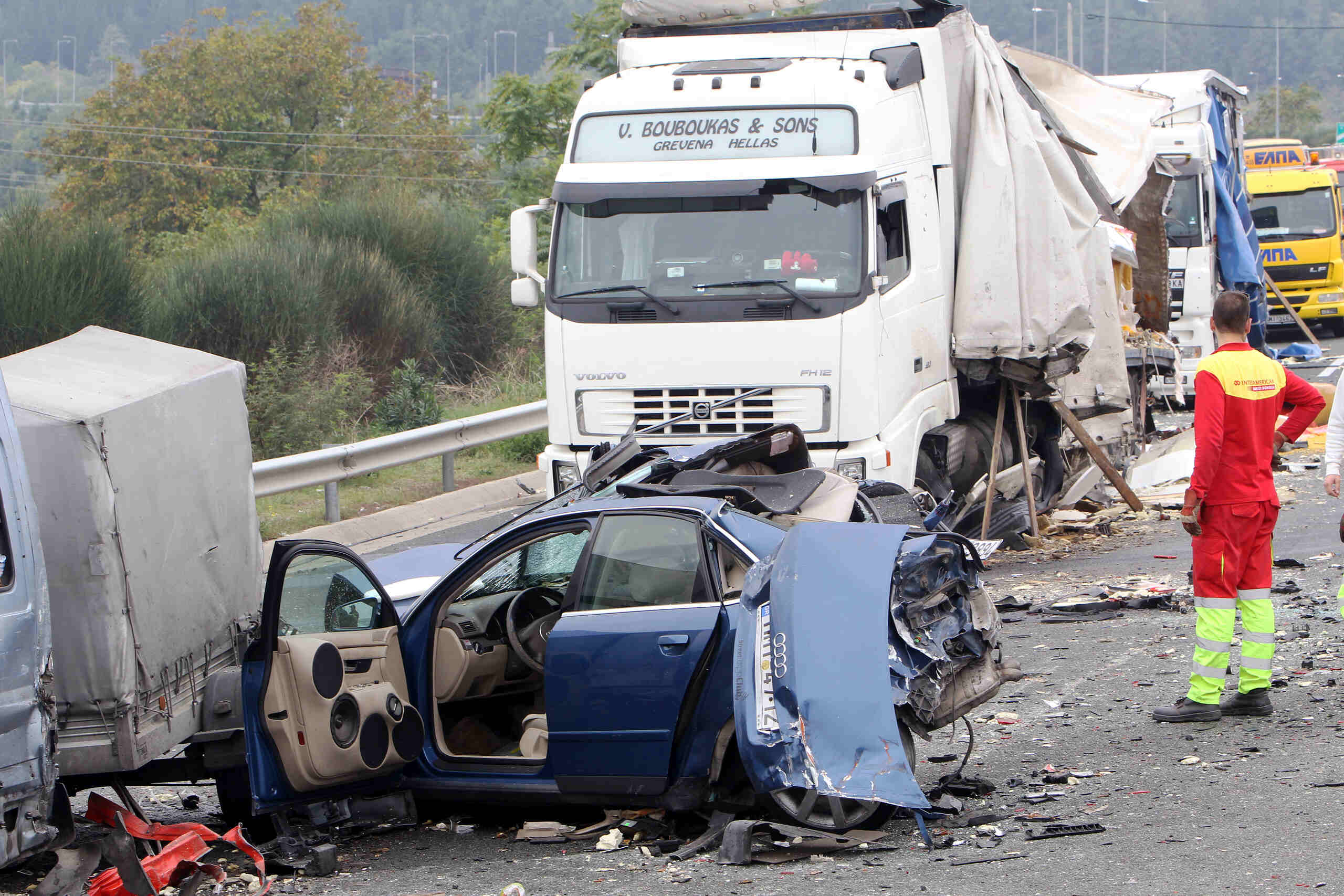
A crash can leave you overwhelmed at the moment you need to think clearly. While you are dealing with injuries, shock, and the insurance adjuster calling before your car is even towed away, it is easy to overlook the steps that protect both your health and your injury claim. Graves McLain Injury Lawyers lays out the moves that matter, in the order they come up, so you can act instead of guessing what to do after a car accident in Tulsa.
Check yourself and your passengers before anything else. If you can get to the shoulder of I-44 or off the travel lanes of the Broken Arrow Expressway without making an injury worse, do it, and if the cars are not drivable, leave them and get clear of traffic.
Do not pull an injured person out of a vehicle unless fire or fuel makes staying more dangerous than moving. Wait for the paramedics, who are trained to move someone safely.
Leaving the scene is one mistake that can create serious legal problems. Under Okla. Stat. tit. 47, § 10-102, a driver in a crash causing injury must stop immediately and remain until the information and assistance duties in Section 10-104 are met. Leaving in order to avoid that can be charged as a felony, on top of any civil claim.
Because the call builds an official record before anyone’s memory shifts. Dispatch time-stamps the location and what you reported, and a Tulsa Police Department officer comes out to write the crash report that follows the claim from start to finish.
Ask for medical help for anyone who might be hurt, yourself included. The paramedic who checks you at the curb creates the first entry in a medical timeline that an insurer will scrutinize later.
Before the officer leaves, write down the report number and the officer’s name. That detail turns a weeks-long records hunt into a same-day request.
Everything, because your phone is the most useful tool you have in the first 20 minutes. Once the vehicles are towed and the intersection reopens, whatever went uncaptured is gone for good. Photograph and collect all of the following:
Witnesses are often difficult to locate after a crash, and police reports do not always include everyone who saw what happened. Collect names and contact information as soon as possible, keep all of your evidence together, and bring it with you when you contact our office.
Oklahoma law requires the exchange, so this is a duty rather than a courtesy. Under Okla. Stat. tit. 47, § 10-104, drivers in an injury collision must give their name, address, and vehicle registration, show a license when asked, and arrange reasonable help for anyone hurt.
Get these details before anyone leaves:
Take photos of the other driver’s license and insurance card instead of writing the information by hand, since even a small mistake can delay your claim. Limit the conversation to exchanging required information and avoid discussing who caused the crash.
Serious injuries are not always obvious at the scene. Someone who feels able to drive home can end up in an emergency room the next morning, which is exactly why the timing of that first visit matters to the claim.
There is a claim to go quickly, too. A gap between the wreck and the first medical visit is the most common reason a claim gets questioned later, and every day without a record widens it.
Our Tulsa car accident lawyers would rather you see an emergency room, an urgent care, or your own physician the same day, and give the provider a complete account rather than a partial one. Keep the discharge papers and bills, because that record anchors an injury claim more than almost anything else.
An apology at the scene can cost you real money later. Oklahoma uses a modified comparative fault rule under Okla. Stat. tit. 23, § 13, meaning your recovery shrinks by the share of blame assigned to you and vanishes once that share tops 50%.
A few reflexes cause the most damage in the first days:
Facts are always safe to share. The time, the place, the direction you were traveling, and the vehicles involved can be stated plainly, without any theory about who was at fault.
Carefully, and only the basic facts, because your policy almost certainly requires prompt notice of a crash. Call your carrier, give the basic facts, and open the claim, since a late report can create a coverage headache on top of your injuries.
Notice is not a statement, though. You can report a wreck without agreeing to a recorded interview, signing a blanket medical authorization, or endorsing anyone’s theory of fault.
Tell them treatment is ongoing and that you will follow up. Then hand the back-and-forth to our Tulsa car accident lawyers before you sign or record anything, since one early sentence can shrink a claim that has not even been valued yet.
Many people contact us after leaving the hospital or after receiving repeated calls from the insurance company. From that point forward, our lawyers take over the legal work. Our team carries the load a claim creates:
Every consultation is free, and there are zero out-of-pocket fees from your first call to the resolution of the case. Speak with our Tulsa car accident lawyers at no cost, and let us tell you what your next month should hold.
Two years from the date of injury, and it arrives sooner than most people think. Under Okla. Stat. tit. 12, § 95(A)(3), that is how long an injured driver has to file suit, and two years sounds generous until you watch how fast the useful proof thins out.
Business camera footage records over itself within days, wrecked cars get repaired or scrapped, and the intersection where it happened is swept clean by the next morning. Claims involving a city, county, or state vehicle move on an even shorter clock, with a written notice deadline that arrives long before the two-year mark.
The primary reason to move early is preservation. A claim opened in the first week protects evidence that a claim opened in month 20 has already lost, so find out what your case may be worth while the trail is fresh.

Drivers bring these questions to our Tulsa car accident lawyers once the immediate emergency has passed.
The crash report is typically available within a few business days from the law enforcement agency that responded to the scene. If you have the report number, obtaining it is usually faster, but the crash date, location, and the drivers’ names are often enough if you do not. Our office routinely obtains crash reports for clients, so you can leave that step to us.
Crash reports get prepared quickly, sometimes before every witness has been interviewed, so factual mistakes happen. Errors such as the wrong direction of travel or an omitted witness may be corrected through a supplemental report. If the report assigns fault incorrectly, our lawyers use photographs, vehicle damage, and witness statements to challenge that conclusion.
Usually, yes, and the order of payment matters. Medical payments coverage under your auto policy may pay first regardless of fault, followed by your health insurance.
If your case settles, your health insurer may have a right to reimbursement from the recovery. Our lawyers coordinate those coverage issues so medical bills do not interfere with treatment.
Care is still within reach. Many providers will treat an injured person under a letter of protection, a written promise that the provider waits for payment until the claim resolves. We help set that up and make sure the balance is handled through the recovery rather than landing on your credit.
Not the adjuster who names a number first. A fault percentage is a negotiating position until the parties agree on one or a jury sets it, and the figure in an early letter frequently does not survive the evidence.
Those early numbers get proposed before much of the evidence exists. Our lawyers answer them with photographs, witness statements, and vehicle damage that show how the crash actually happened.
You may still have a source of recovery through your own policy. Uninsured and underinsured motorist coverage pays for your injuries when the at-fault driver has no insurance or not enough of it, and Oklahoma requires it in every auto policy unless the insured rejected it in writing, so many drivers carry it without remembering they do. Your declarations page, the summary at the front of the policy listing what you actually bought, will show it, so send it to us before you assume there is nowhere to turn.
Often, yes, because injuries and costs have a way of growing after the fact. A consultation is free and carries no obligation, so a short conversation can tell you whether a claim is worth pursuing before you accept a quick settlement. Signing a release ends the claim for good, even if new symptoms show up next week.
The days after a wreck move fast, and the decisions you make now shape what your claim looks like later. Daniel B. Graves and W. Chad McLain built this practice around serious injury cases, and our attorneys file these claims in Tulsa County District Court when an insurer’s offer does not reflect what happened.
If you were injured in a car accident in Tulsa, do not wait to get legal help. Contact Graves McLain Injury Lawyers at (918) 359-6600 for a free consultation. You pay nothing unless we recover for you.