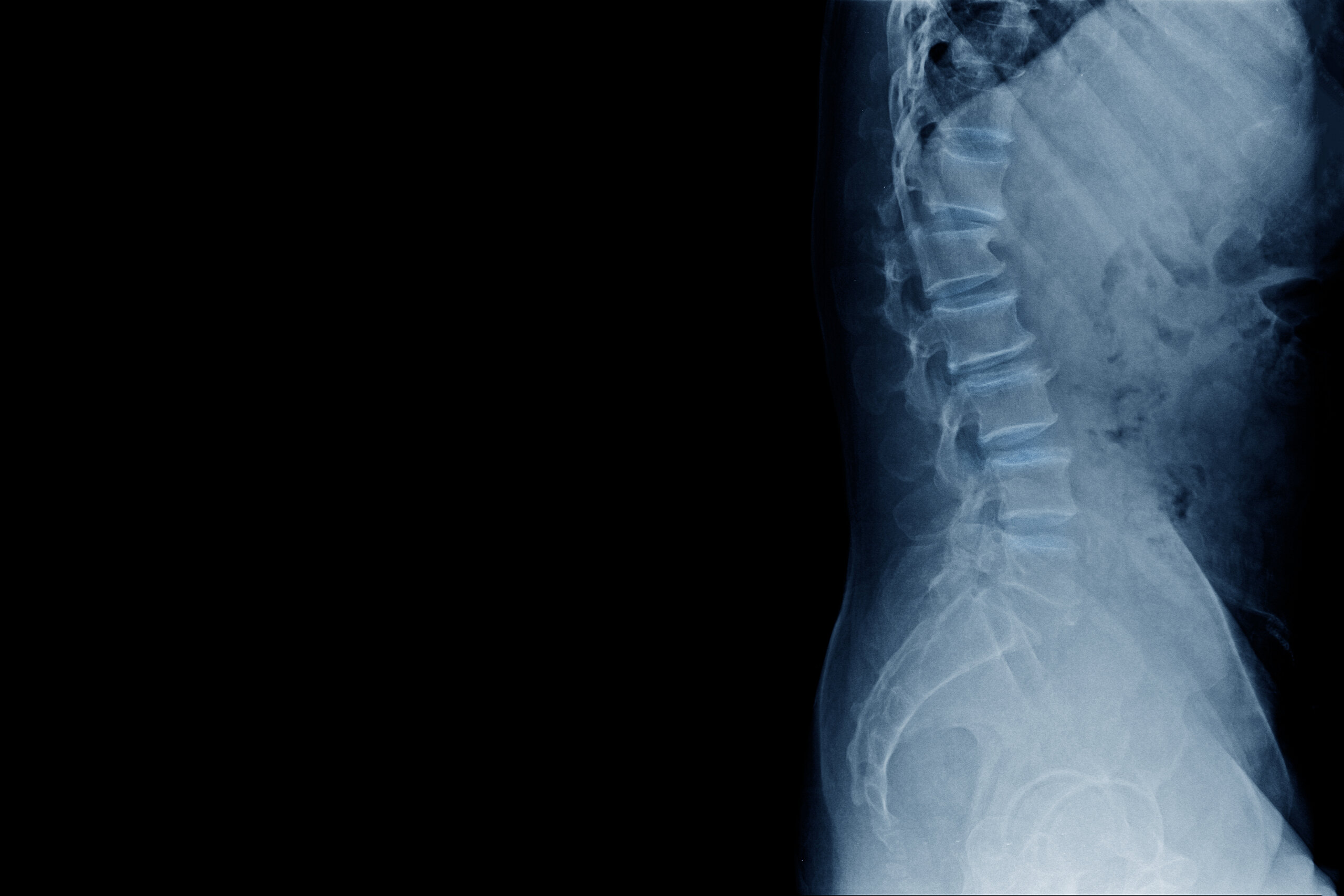
The level of a spinal cord injury determines far more than the medical diagnosis. It shapes the cost of lifetime care, the type of adaptive equipment needed, the ability to return to work, and ultimately the value of a personal injury claim. A paraplegia diagnosis and a quadriplegia diagnosis lead to very different lives and very different compensation calculations.
Oklahoma law allows people who sustain spinal cord injuries through another party’s negligence to pursue compensation for both current and future damages. But the amount of compensation available depends heavily on where on the spinal cord the injury occurred and how completely it disrupted nerve function.
The type and severity of the spinal cord injury can significantly affect the value of an injury claim because they influence medical costs, long-term care needs, and loss of income. Quadriplegia typically leads to greater compensation than paraplegia because it usually involves more extensive physical limitations and lifelong care.
The difference between paraplegia and quadriplegia comes down to where on the spinal cord the injury occurs. That location determines which parts of the body lose function.
The Eunice Kennedy Shriver National Institute of Child Health and Human Development (NICHD) defines tetraplegia, formerly called quadriplegia, as the condition of a person with a spinal cord injury at a level anywhere from the C1 vertebra down to T1.
These individuals may experience a loss of sensation, function, or movement in their head, neck, shoulders, arms, hands, upper chest, pelvic organs, and legs.
Paraplegia is the general term describing the condition of people who have lost feeling in or are not able to move the lower parts of their body. Paraplegia results from injuries to the thoracic, lumbar, or sacral regions of the spinal cord, generally T1 and below.
The practical differences between paraplegia and quadriplegia are significant and directly affect the cost of care, the level of independence a person may achieve, and the types of adaptive equipment required.
A person with paraplegia typically retains full use of their arms and hands. They may use a manual wheelchair, drive a modified vehicle, and perform many daily tasks independently. A person with quadriplegia may lose partial or complete function in all four limbs.
| Injury Level | Classification | Typical Function | Typical Care Needs |
| C1-C4 | High quadriplegia | Limited or no movement below the neck; may need ventilator support | 24-hour attendant care, power wheelchair, home and vehicle modifications, respiratory equipment |
| C5-C8 | Low quadriplegia | Some arm and hand function depending on level; limited grip strength | Part-time to full-time attendant care, power or manual wheelchair, adaptive technology for daily tasks |
| T1-T6 | High paraplegia | Full arm function; loss of trunk stability and lower body function | Manual wheelchair, modified vehicle, possible part-time attendant care for certain tasks |
| T7-T12 | Low paraplegia | Full arm function; some trunk control; loss of leg function | Manual wheelchair, modified vehicle, greater independence with daily tasks |
| L1-S5 | Lumbar/sacral paraplegia | Varying leg function; may retain some walking ability with braces | Leg braces, walking aids, or manual wheelchair depending on completeness of injury |
This range of outcomes explains why two spinal cord injury claims may produce dramatically different compensation figures even though both involve permanent paralysis.
A complete spinal cord injury means no motor function or sensation is preserved below the level of injury. An incomplete injury means some nerve signals still pass through the damaged area, preserving partial movement or feeling.
Incomplete tetraplegia is the most frequent neurological category among recent spinal cord injuries, accounting for 47.6% of cases. Incomplete injuries generally carry a better prognosis for recovery than complete injuries, but “incomplete” does not mean minor. Many people with incomplete spinal cord injuries still face permanent limitations that require lifelong medical care and adaptive support.
The complete versus incomplete distinction matters in a legal claim because it affects the projected cost of future care, the likelihood of returning to work, and the life expectancy calculations used to project lifetime damages.
The classification of a spinal cord injury, whether paraplegia or quadriplegia, complete or incomplete, drives every component of the damages calculation in an Oklahoma injury claim. Higher-level injuries with greater loss of function produce higher medical costs, greater loss of earning capacity, and larger non-economic damages for pain, suffering, and loss of quality of life.
The National Spinal Cord Injury Statistical Center’s (NSCISC) 2025 Facts and Figures report provides the most widely cited lifetime cost estimates for spinal cord injuries. These figures include direct medical and living expenses in 2024 dollars but do not include lost wages or productivity.
| Injury Severity | First-Year Costs | Annual Costs After | Lifetime Cost (Age 25) | Lifetime Cost (Age 50) |
| High quadriplegia (C1-C4) | $1,410,163 | $244,879 | $6,256,937 | $3,438,706 |
| Low quadriplegia (C5-C8) | $1,018,966 | $150,222 | $4,571,708 | $2,812,009 |
| Paraplegia | $687,262 | $91,042 | $3,059,615 | $2,007,933 |
| Motor functional (any level) | $460,224 | $55,900 | $2,090,344 | $1,475,423 |
These estimates do not include indirect costs like lost wages, fringe benefits, and productivity, which averaged $95,309 per year in 2024 dollars.
Only 17.8% of people with traumatic spinal cord injuries are employed at one year post-injury. Employment rates improve over time but remain far below the general population regardless of injury type.
However, the gap between paraplegia and quadriplegia is meaningful. A person with paraplegia who retains full use of their arms and hands may return to desk-based or remote work with accommodations. A person with high quadriplegia who has limited or no hand function faces a much narrower range of employment options, even with adaptive technology.
Lost earning capacity is calculated based on what the injured person would have earned over their working life without the injury. The more the injury limits the ability to work, the higher the lost earning capacity figure.
Non-economic damages cover pain and suffering, emotional distress, loss of enjoyment of life, and loss of consortium. No statutory cap currently limits these damages.
The severity and permanence of a spinal cord injury directly affect the non-economic damages a jury may award. A person with complete quadriplegia who has lost the ability to hold their child, drive a car, or live independently faces a fundamentally different quality of life than a person with incomplete paraplegia who retains some mobility.
Both injuries are devastating. But the scope of loss differs, and juries consider that scope when determining non-economic awards.
Navigating a life-changing spinal cord diagnosis can feel overwhelming, but you don’t have to map out the future alone—explore our comprehensive guide on common catastrophic injuries to learn how lifetime medical expenses, specialized care plans, and your legal recovery are calculated.
Building a spinal cord injury claim that reflects the true lifetime cost requires evidence that goes far beyond medical bills and pay stubs. Three types of professional testimony play a central role in translating a medical diagnosis into a dollar figure that a jury or insurer can evaluate.
A life care planner creates a detailed projection of every medical, rehabilitative, and support service the injured person will need for the rest of their life. The plan covers physician visits, medications, equipment replacement schedules, home modifications, attendant care hours, and psychological support.
This document translates the diagnosis into a year-by-year cost projection that forms the backbone of the economic damages claim.
A vocational rehabilitation consultant evaluates the injured person’s ability to return to work given the specific functional limitations of their injury. The consultant considers the person’s education, work history, transferable skills, and the physical demands of available jobs.
The gap between pre-injury earning capacity and post-injury earning potential becomes the lost earning capacity figure.
An economist ties these projections together into a present-value calculation. Using the life care plan, vocational assessment, and wage data, the economist produces a single figure that represents the total lifetime cost of the injury in today’s dollars. This number is what the jury or insurance adjuster evaluates when determining the claim’s value.
Without all three of these components, a spinal cord injury claim risks undervaluing damages that will accumulate across decades. Insurance companies have their own economists and life care planners working to minimize the projected cost. The injured person needs professionals of equal caliber working on their side.
Oklahoma follows a modified comparative negligence rule under Okla. Stat. tit. 23, § 13. An injured person may recover compensation as long as their share of fault is 50% or less. Damages are reduced by the person’s percentage of fault. If fault reaches 51% or higher, Oklahoma law bars any recovery.
In a spinal cord injury case worth several million dollars, even a small percentage of comparative fault has a major financial impact. Insurance companies routinely try to shift fault onto the injured person to reduce payouts. Evidence from the accident scene, witness testimony, and medical records all factor into how fault is allocated.

An incomplete injury can lead insurers to offer less because they may argue the person will regain more function over time. Strong medical records and expert evaluations help show the likely long-term impact and support a fairer settlement.
If your diagnosis changes or your condition worsens, your claim should reflect the updated medical reality. Settling too early can leave you undercompensated for the care and support you may ultimately need.
Life expectancy affects how much future compensation a spinal cord injury claim includes. A shorter life expectancy can increase the importance of using an injury-specific damages model to calculate future medical costs, lost wages, and other losses accurately.
The injury level shows where on the spinal cord the damage occurred, while the American Spinal Injury Association Impairment Scale (ASIA) shows how severe the neurological impairment is. Two people with the same injury level can have very different outcomes depending on their ASIA grade.
Oklahoma generally gives injured people two years from the date of the injury to file a personal injury lawsuit (Okla. Stat. tit. 12, § 95(A)). Claims against government entities require written notice within one year. For minors, the statute of limitations may be tolled until the injured person turns 18.
A spinal cord injury at work may involve both a workers’ compensation claim and a separate third-party liability claim. Workers’ comp covers medical bills and a portion of lost wages. If a third party, such as a subcontractor, equipment manufacturer, or property owner, contributed to the injury, a civil claim for additional damages may be pursued at the same time.
Graves McLain handles spinal cord injury cases on a contingency fee basis. There are no upfront fees or hourly charges. The firm advances costs related to your case and collects a fee only if it recovers compensation on your behalf.
A paraplegia or quadriplegia diagnosis tells you where the injury is and what function was lost. It does not tell you what your claim is worth. That number depends on a life care plan built by professionals who understand the medical reality, an economic model that projects costs across decades, and a legal team that knows how to present those figures to an insurer or jury.
If you or someone you love sustained a spinal cord injury in Tulsa or anywhere in Oklahoma, talk with a SCI attorney at Graves McLain Injury Lawyers. You pay nothing unless Graves McLain recovers compensation on your behalf. Call (918) 359-6600 for a free consultation.