Proving that a dangerous condition existed is only part of an Oklahoma retail slip and fall case. An injured shopper often must also establish that the store created the hazard, actually knew about it, or should have discovered it through reasonable care.
That distinction can make or break a claim against a grocery store, big-box retailer, or other commercial premises. For example, a puddle photographed after a fall proves that liquid was present, but it does not necessarily establish whether employees had a reasonable opportunity to find and address it. Experienced Oklahoma slip and fall lawyers look beyond the photograph to gather maintenance logs, employee statements, and store surveillance footage that prove notice.
To prove notice in an Oklahoma retail slip and fall case, evidence must generally show that the store created the dangerous condition, actually knew about it, or should have discovered it through reasonable care. Surveillance footage, inspection records, employee testimony, incident reports, and evidence showing how long the hazard existed can help establish what the store knew or should have known.
Customers entering a retail store are generally considered invitees. Under Oklahoma premises liability law, a store owes invitees a duty to exercise reasonable care concerning qualifying dangerous conditions on the property.
That does not mean a retailer is automatically responsible whenever someone falls. Oklahoma’s premises liability framework requires an examination of whether the store knew or should have known about the dangerous condition and whether reasonable action could have prevented the injury.
Consider two grocery store spills. In the first, another shopper drops a bottle seconds before someone slips. In the second, liquid remains in an aisle while employees repeatedly walk nearby without cleaning it or warning customers. Both accidents involve a wet floor, but the evidence concerning notice is very different.
Actual notice means the retailer knew that the dangerous condition existed. The challenge is finding evidence that establishes that knowledge.
For example, if a customer tells an employee that milk is leaking from a refrigerated case but no one cleans the floor or posts a warning, the earlier report could provide strong evidence of actual notice. Other examples might include an employee observing the hazard, a manager receiving a complaint, or store records documenting the problem before the accident.
Evidence of actual notice can come from:
Actual notice does not require the injured shopper to have personally heard an employee acknowledge the danger. The evidence may emerge only after store records and testimony are obtained.
Constructive notice raises a harder question: Should the store have discovered the danger even if no one admitted to knowing about it?
Oklahoma law requires reasonable care for invitees regarding hidden dangers the owner knows or should know about. Constructive notice can therefore become important when a dangerous condition existed long enough, or when circumstances should have led to its discovery under reasonable store practices.
Imagine that a spill remained in a busy aisle for a significant period without inspection or cleanup. Evidence showing its duration, employee activity in the area, and the store’s inspection practices could support an argument that employees should have found it. Constructive notice prevents a retailer from avoiding responsibility simply by saying, “No employee saw it.”
Duration is often one of the hardest facts to establish because an injured shopper usually arrives after the dangerous condition already exists. You may have no way of knowing whether a puddle appeared 30 seconds or 30 minutes before you encountered it. This is where seemingly minor evidence can become important.
Surveillance footage might show when the spill occurred. Witnesses may remember seeing it earlier. Employees may be able to describe when the area was last inspected. Even the physical appearance of the hazard can sometimes provide relevant information—for example, footprints, shopping-cart tracks, dirt, or partially dried liquid may suggest that people had already passed through the area.
No single detail automatically proves constructive notice. The goal is to assemble enough evidence to establish a credible timeline.
Many retailers use inspection procedures intended to identify spills, obstructions, and other hazards. Employees may conduct periodic floor checks or record when an aisle, restroom, entrance, or other area was inspected. Those records can become valuable evidence after a fall.
A sweep log might show that an inspection was overdue, while surveillance footage could reveal whether a documented inspection actually occurred. Conversely, records showing that an employee carefully inspected the area shortly before a hazard unexpectedly appeared may support the store’s defense.
The important question is not simply whether the retailer had a safety policy. Evidence should show what employees actually did before the accident. That distinction is particularly useful when written records and objective evidence tell different stories.
Surveillance footage can be some of the most valuable evidence in a retail premises liability case because it may answer several questions at once. Video could show how the hazard developed, how long it remained, whether employees passed nearby, and the circumstances of the fall itself.
But the absence of visible cameras does not mean no footage exists. A retailer may have cameras covering entrances, checkout areas, main aisles, or adjacent spaces that capture relevant activity even if the precise spot of the fall is outside the frame.
Video should be quickly identified and preserved. Retail surveillance systems can overwrite recordings in accordance with the company’s retention practices, and there is no safe assumption that relevant footage will remain available indefinitely.
This creates an important difference between the legal filing deadline and the practical evidence deadline: you may have considerable time to file a lawsuit, while valuable video disappears much sooner.
After a customer is injured, a manager or employee may prepare an incident report that records basic details of what happened. The report can identify employees and witnesses, describe the location, and preserve statements made close to the time of the accident.
An incident report does not necessarily contain everything the retailer knows. Other internal materials may include photographs, employee statements, video, inspection records, maintenance documents, or communications concerning the event.
You should also understand that the store creates these records for its own purposes. If you are asked to provide a statement after a serious fall, stick to facts you know rather than guessing about the cause or minimizing injuries that have not yet been fully evaluated.
Notice can be analyzed differently when the store or its employees created the hazard themselves. If an employee causes a dangerous condition while stocking shelves, cleaning, moving merchandise, or performing another task, the question may no longer be whether the retailer had enough time to discover a condition created by an unknown customer.
For example, an employee might mop a floor without adequately warning customers or leave merchandise obstructing a walkway. Evidence establishing how the condition was created can therefore be just as important as evidence showing how long it existed.
Retail hazards are not limited to grocery aisles. Customers move through entrances, checkout areas, restrooms, displays, sidewalks, and parking areas during an ordinary shopping trip.
Common problem areas include:
| Location | Potential Hazard |
|---|---|
| Grocery Aisles | Spilled liquids, dropped food, or leaking refrigeration equipment |
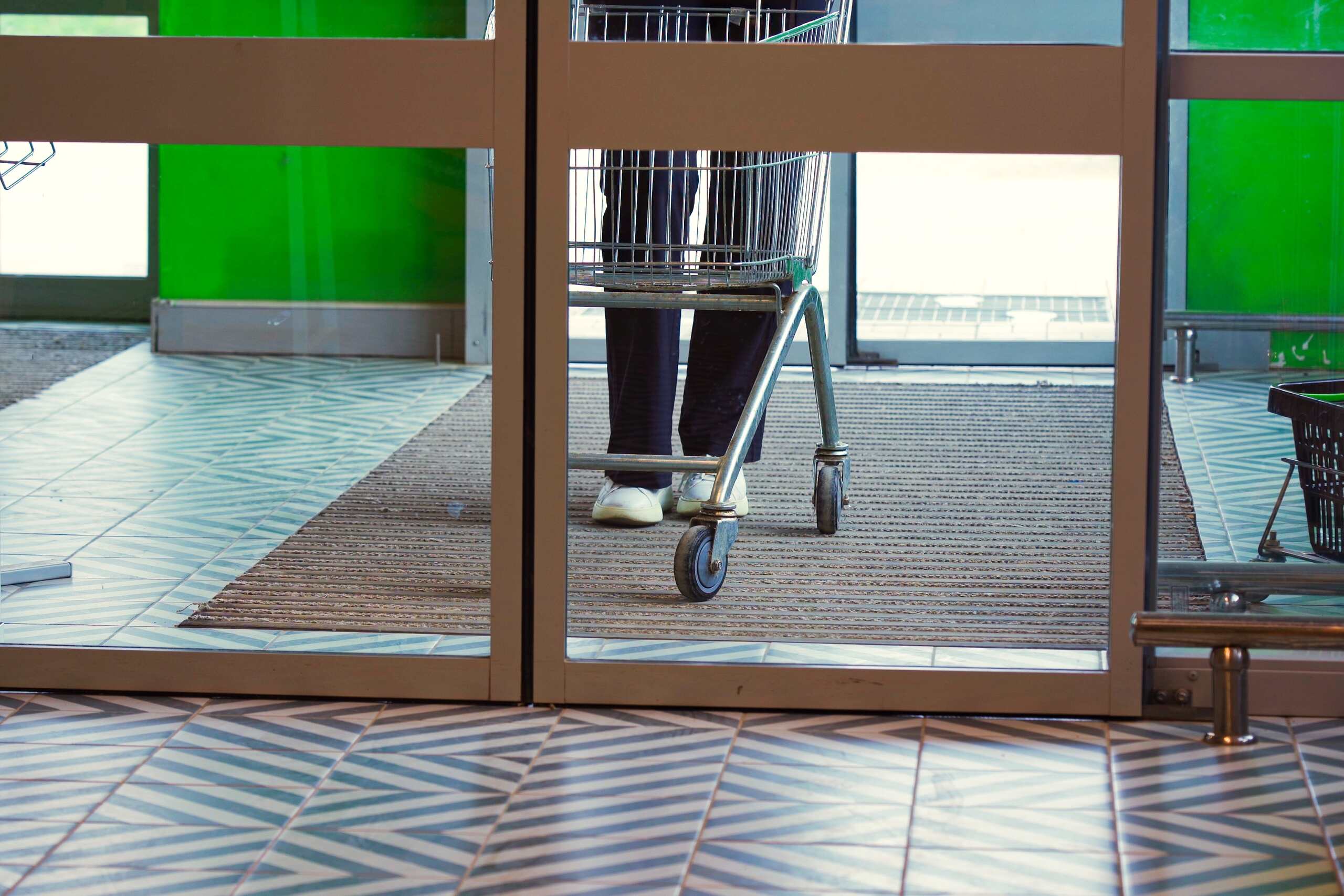
| Entrances | Tracked-in rainwater or wet flooring |
| Checkout Areas | Dropped merchandise or liquids |
| Restrooms | Wet floors, leaks, or inadequate maintenance |
| Displays and Walkways | Merchandise, cords, mats, or other obstructions |
| Parking Areas | Potholes, uneven pavement, debris, or other walking-surface hazards |
Different areas can also involve different questions about control and maintenance. For example, falls in store parking lots may require determining whether the retailer, property owner, shopping-center operator, or another party was responsible for maintaining the area.
No special premises liability rule automatically applies because the defendant is Walmart or another large national retailer. The same basic Oklahoma negligence principles govern whether a business owed a duty and failed to exercise the required care.
Large retailers can, however, have extensive internal safety procedures, surveillance systems, inspection practices, and corporate records. Those materials can become important evidence in determining whether employees followed established procedures and whether the company had notice of a dangerous condition.
The strength of a Walmart slip and fall lawsuit—or a claim against any other retailer—depends on the evidence surrounding the particular accident, not simply the company’s size or name.
A retailer may argue that it had no duty because a reasonable customer should have seen and avoided the dangerous condition. Oklahoma has historically recognized an open-and-obvious doctrine in premises liability cases, but the rule is not absolute.
The Oklahoma Supreme Court has recognized circumstances in which a property owner can still owe an invitee a duty despite an obvious condition, including situations where the owner has reason to expect that the invitee will encounter the danger.
Whether that principle applies depends heavily on the facts. Photographs, video, lighting, displays, the color or visibility of the substance, and the reason you encountered the area can all become relevant.
Yes. Retail defendants and insurers may argue that you were distracted, failed to watch where you were walking, ignored a warning, or otherwise contributed to the accident.
Oklahoma’s modified comparative negligence law allows an injured person to recover damages if they are 50% or less responsible, with compensation reduced by their percentage of fault. A person found 51% or more responsible cannot recover.
That makes evidence important on both sides of the case. Surveillance footage that establishes how long a spill existed might also show where you were looking, whether warning signs were present, and how visible the hazard actually was.

Oklahoma’s general personal injury statute of limitations generally allows two years to file suit. Evidence such as surveillance footage can disappear much sooner, however, so the lawsuit deadline should not be used as a reason to delay the investigation into the accident.
Oklahoma premises liability law does not impose a single inspection interval for every retailer or situation. Whether inspection practices were reasonable depends on factors such as the type of business, location, foreseeable hazards, and circumstances surrounding the accident.
A lack of eyewitnesses does not automatically prevent a claim. Surveillance footage, photographs, physical evidence, medical records, and other information can help establish what happened and what condition caused the fall.
A retailer may not voluntarily provide internal evidence simply because you request it. Formal preservation demands and, if litigation becomes necessary, the discovery process can be used to pursue relevant evidence that is legally obtainable.
If you suffered a serious injury after slipping or falling in an Oklahoma retail store, proving what the business knew—or reasonably should have known—can be central to your claim. The Tulsa slip and fall lawyers at Graves McLain Injury Lawyers can investigate the hazard, preserve available evidence, examine store records, and pursue compensation when negligence caused your injuries.
Call Graves McLain Injury Lawyers at (918) 359-6600 for a free consultation. We can review what happened and discuss your legal options, and you pay nothing unless we recover compensation for you.