
Most car accident claims in Oklahoma involve compensatory damages, which are the medical bills, lost wages, and pain and suffering that result from an injury. Punitive damages are different. They exist to punish conduct that goes beyond ordinary negligence and to discourage others from behaving the same way.
In a distracted driving case, punitive damages may become available when the at-fault driver’s behavior was so reckless that a jury decides compensatory damages alone are not enough.
Texting at highway speed, livestreaming on social media behind the wheel, or causing a crash while scrolling through a phone app may cross the line from careless driving into reckless disregard for human life.
Oklahoma law sets specific rules for when punitive damages apply, how much a jury may award, and what evidence is required to support a claim.
Punitive damages may be awarded in Oklahoma when a distracted driver’s conduct goes beyond ordinary negligence and shows reckless disregard for the safety of others. They matter because, in addition to compensating the victim, they are intended to punish the wrongdoer and deter similar dangerous behavior in the future.
Punitive damages are a category of damages that go beyond compensating the injured person. Under Oklahoma law, a jury may award punitive damages “for the sake of example and by way of punishing the defendant” in civil actions involving a breach of an obligation not arising from a contract.
In plain terms, compensatory damages make the injured person whole. Punitive damages punish the person who caused the harm and send a message that the behavior is unacceptable.
Compensatory damages cover the actual losses tied to the injury. These include medical bills, lost income, property damage, pain and suffering, and emotional distress. The goal is to restore the injured person to the financial and personal position they held before the accident, as closely as possible.
Punitive damages serve a different purpose entirely. They do not compensate for a specific loss. Instead, they address the quality of the defendant’s conduct. A jury may award punitive damages when the evidence shows the defendant’s actions were so reckless or intentional that ordinary compensation is not enough to hold them accountable.
Yes, in some cases. Oklahoma’s punitive damages statute creates three categories based on the severity of the defendant’s misconduct. Each category carries its own cap.
| Category | Standard of Conduct | Maximum Award |
| Category I | Reckless disregard for the rights of others | $100,000 or the amount of actual damages, whichever is greater |
| Category II | Intentional conduct with malice | $500,000, twice the actual damages, or the defendant’s financial benefit from the misconduct, whichever is greatest |
| Category III | Intentional, malicious, life-threatening conduct | No cap |
Most distracted driving cases that qualify for punitive damages fall under Category I. A driver who was texting at the time of a crash may have acted with reckless disregard, but proving intentional malice under Category II or life-threatening conduct under Category III requires a significantly higher factual showing.
Punitive damages do not apply to every distracted driving accident. The fact that a driver was distracted at the time of a crash is not, by itself, enough to trigger a punitive damages claim. The distracted behavior must rise to the level of reckless disregard for the safety of others.
Reckless disregard goes beyond ordinary negligence. Ordinary negligence is a momentary lapse in attention, like glancing at a passenger and missing a brake light. Reckless disregard involves a conscious choice to engage in conduct that the defendant knew, or reasonably should have known, created a serious risk of harm to others.
Oklahoma juries evaluate reckless disregard based on several statutory factors, including the seriousness of the hazard to the public, the defendant’s awareness of the risk, and the defendant’s attitude and conduct after the incident.
Not all distractions carry the same weight in a punitive damages analysis. Behaviors that involve a deliberate, sustained choice to ignore the road are more likely to meet the reckless disregard threshold than a brief, reflexive glance at a phone notification.
Behaviors that may support a punitive damages claim include the following:
A single glance at a notification, while still dangerous, may not meet the reckless disregard standard on its own. The strength of a punitive damages argument often depends on the duration of the distraction, the conditions at the time, and whether the driver had reason to know the behavior was dangerous.
Oklahoma requires clear and convincing evidence to support a punitive damages award. This is a higher burden of proof than the preponderance of the evidence standard used for compensatory damages.
Clear and convincing evidence means the proof must leave no substantial doubt in the jurors’ minds that the defendant’s conduct was reckless or intentional.
Building a punitive damages case in a distracted driving accident often requires evidence that goes beyond the police report. Key sources include the following:
Preserving this evidence quickly is critical. Cell phone carriers may overwrite usage data, and app logs may be deleted.
A Tulsa distracted driving accident attorney may send preservation letters to the carrier, the app developer, and the defendant’s insurer to protect this evidence before it disappears.
Oklahoma law makes it unlawful to use a hand-held electronic communication device to compose, send, or read a text message while a motor vehicle is in motion. A violation of this statute is a traffic infraction carrying a $100 fine. It is not, by itself, proof of reckless disregard.
However, a statutory violation may serve as supporting evidence in a punitive damages claim. If a driver was actively texting in violation of Oklahoma law at the time of a crash that caused serious injuries, that violation, combined with other evidence of reckless behavior, may help establish the reckless disregard standard.
The texting ban alone does not guarantee punitive damages. But it removes any argument that the driver did not know texting while driving was dangerous. Oklahoma made it illegal precisely because the legislature recognized the risk it poses to public safety.
Oklahoma law requires punitive damages to be decided in a separate proceeding conducted after the jury has already found the defendant liable and awarded compensatory damages.
This two-phase structure means the jury first decides whether the defendant was negligent and what compensatory damages the injured person is owed. Only after that determination does the jury consider whether the defendant’s conduct justifies punitive damages.
This process protects defendants from being punished before liability is established. It also means the injured person must first prove their compensatory case before the punitive question reaches the jury.
Once the punitive damages phase begins, Oklahoma law directs the jury to weigh specific statutory factors. These factors include the seriousness of the hazard the defendant’s conduct created for the public, how long the misconduct continued, the defendant’s awareness of the risk, the defendant’s response after the incident, and the defendant’s financial condition.
In a distracted driving case, a jury might consider how long the driver was engaged with their phone before the crash, whether the driver had been warned about the behavior before, and whether the driver showed remorse or attempted to conceal the phone use after the collision.
Oklahoma courts require the trial judge to act as a gatekeeper, determining whether sufficient evidence exists to submit the punitive damages question to the jury. If the judge finds that the evidence does not meet the clear and convincing standard, the punitive damages claim may be dismissed before the jury ever considers it.
This gatekeeping function means the quality of evidence matters from the beginning of the case. A lawyer who understands punitive damages law in Oklahoma may build the evidentiary foundation before filing, not after.
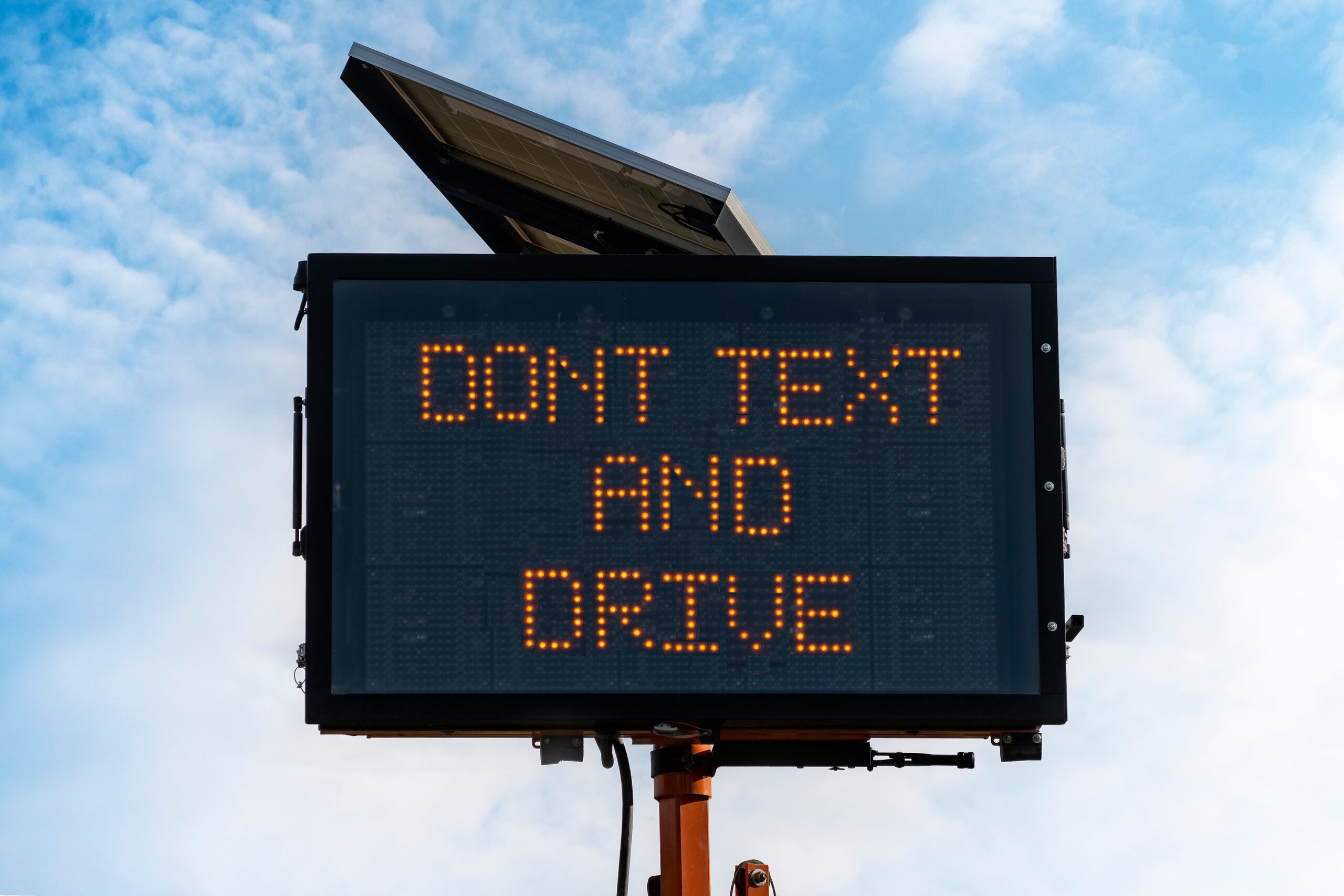
They are uncommon in standard distracted-driving cases, and the threshold is high. Most crashes involve momentary inattention, which qualifies as ordinary negligence rather than reckless disregard. Punitive damages may be available when the facts show sustained, deliberate phone use at high speed, in dangerous conditions, or after previous warnings.
Combining phone use with alcohol or drug impairment significantly strengthens a punitive damages claim. Oklahoma courts have recognized intoxicated driving as a basis for reckless disregard. When impairment and distraction are both present, the combined evidence may make a punitive damages claim stronger, depending on the facts.
The injured person receives the punitive damages award. However, the trial court reviews the amount to confirm it falls within the statutory caps for the applicable category. If the award exceeds the cap, the court reduces it.
Destroying evidence after an accident is called spoliation. If a defendant deletes text messages, app data, or phone records that are relevant to a claim, the court may impose sanctions. These sanctions may include instructing the jury that the destroyed evidence would have been unfavorable to the defendant.
Yes, they may apply to a commercial truck driver and potentially to the trucking company as well. If the driver was texting in violation of both Oklahoma law and FMCSA regulations, the evidence of reckless disregard may be stronger. A trucking company that knew its driver had a history of phone use while driving and failed to act may also face punitive damages.
Two years, in most cases. Punitive damages are part of the underlying personal injury case, not a separate lawsuit. Oklahoma’s two-year statute of limitations for personal injury claims (Okla. Stat. tit. 12, § 95(A)) applies to the entire case, including the punitive damages component.
Many auto insurance policies in Oklahoma exclude coverage for punitive damages. If the at-fault driver’s policy does not cover punitive awards, the driver may be personally responsible for paying the judgment. Collecting on a punitive damages award from an individual defendant may require post-judgment legal measures, such as wage garnishment or liens.
Punitive damages exist because some conduct is too dangerous to address with medical bills and lost wages alone. A driver who chose to scroll through a phone at 65 mph on the Broken Arrow Expressway or I-44 made a decision that put every person on the road at risk. Oklahoma law gives juries the power to respond to that choice.
If you or someone you love was seriously injured by a distracted driver in Tulsa or anywhere in Oklahoma, talk with an attorney at Graves McLain Injury Lawyers. The firm handles serious injury cases on a contingency fee basis, meaning you pay nothing unless Graves McLain recovers compensation on your behalf. Call (918) 359-6600 for a free consultation.