
A crash with a company vehicle can leave you in pain, out of work, and facing a business that already has lawyers on the team. The Tulsa commercial vehicle accident lawyers at Graves McLain Injury Lawyers represent people in Tulsa who were seriously injured by company vehicles and commercial drivers.
In Oklahoma, a commercial vehicle accident is any collision involving a vehicle used for business, from a plumber’s van or a utility truck to a fleet pickup or a delivery box truck, and the company behind it may share responsibility for your injuries.
Our team identifies every business that played a role in the crash, preserves the records those businesses control, and pursues the insurance coverage that a personal auto claim would never reach.
Consultations are free, and you pay nothing unless we recover compensation for you. Call 918-359-6600 or reach out online to talk with our team today.
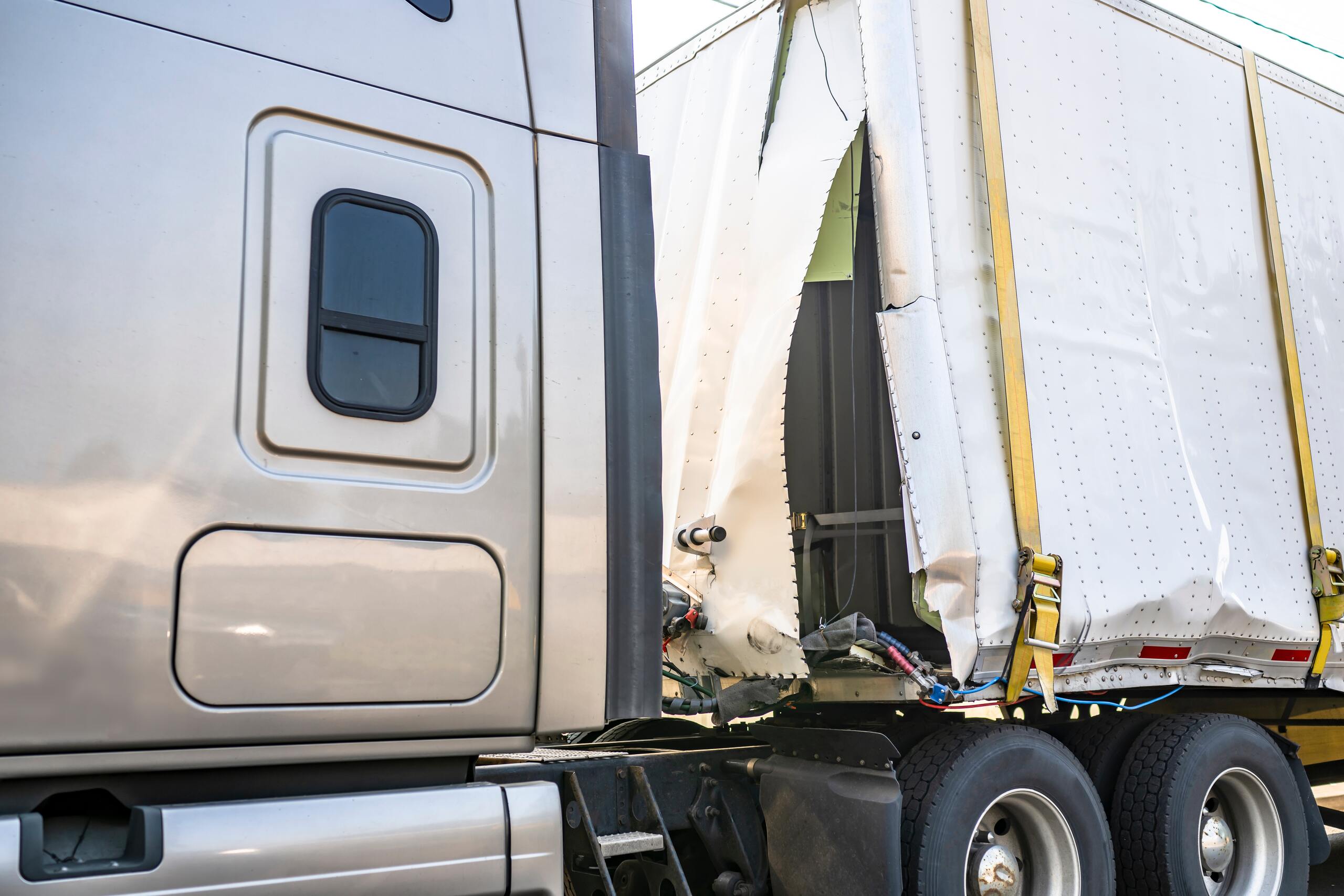
A commercial vehicle accident is a crash involving a vehicle being used for business at the time, whether owned by a company, leased to one, or driven by someone working for one. The vehicle does not have to be a semi-truck; work vans, service trucks, and company cars all count when they are on business.
The label matters because it changes who you can hold accountable and how much insurance may be available. The vehicles involved in these claims in Tulsa often include:
Larger rigs fall into this category too. If your crash involved commercial trucks and tractor-trailers, federal trucking rules add another layer to the case. The same is true for T-bone collisions with a tractor-trailer at Tulsa intersections and highway interchanges.
Federal safety rules from the Federal Motor Carrier Safety Administration (FMCSA) generally apply to vehicles of 10,001 pounds or more used in interstate commerce. Many vans and pickups weigh less, and many local service trucks never cross a state line, so their drivers may not need a commercial driver’s license (CDL) at all.
When federal rules do not apply, Oklahoma traffic law and ordinary negligence rules govern the claim. That split is one reason these cases need early analysis. The applicable rules decide which safety violations we can prove and which insurance requirements the company had to meet.
Several parties can share legal responsibility for a commercial vehicle crash, including the driver, the employer, the motor carrier, and the vehicle’s owner or lessor. Identifying every one of them is often the difference between a claim capped by one small policy and a claim with access to the coverage your injuries actually require.
The driver who caused the crash is responsible for careless choices such as speeding, following too closely, texting, or running a light. In a commercial case, the driver’s fault is usually the starting point rather than the end of the analysis.
Under a doctrine called respondeat superior, which means “let the master answer,” an employer is generally responsible for crashes its employee causes while doing the job. Oklahoma law also allows separate claims against the company itself, such as negligent entrustment for handing keys to a driver it knew was unsafe. We can explain in more detail when the employer is liable during your free consultation.
A motor carrier is a business operating under a U.S. Department of Transportation (USDOT) number, and it is not always the driver’s direct employer. Carriers carry their own safety duties for driver qualification, inspections, and maintenance, so a carrier can be liable even when the driver works through a staffing company or contract arrangement.
Fleets often lease vans and trucks rather than own them, and a vehicle can pass through several businesses before it reaches the road. An owner who skipped repairs or loaned a vehicle to an unqualified driver may share fault, and a lease agreement can decide whose insurance applies first.
Commercial vehicles usually carry far more liability insurance than personal cars, which is why insurers fight hard to treat a business crash as an ordinary fender bender. The policy behind the vehicle, not the severity of your injuries alone, often sets the practical ceiling on what a claim can recover.
Oklahoma’s minimum liability limits for personal auto policies are low, as the Oklahoma Insurance Department explains, while businesses typically buy commercial policies with higher limits and often an umbrella policy above them. The comparison below shows how the layers usually differ.
| Coverage type | Who usually carries it | What it means for your claim |
|---|---|---|
| Personal auto policy | The individual driver | Oklahoma’s minimum is $25,000 per person and $50,000 per accident for bodily injury, which a serious injury can exhaust quickly. |
| Commercial auto policy | Businesses that own, lease, or regularly use vehicles for work | Limits are commonly far higher than personal minimums, and umbrella or excess policies may sit on top. |
| Motor carrier coverage | For-hire carriers operating larger vehicles in interstate commerce | Federal rules set a minimum financial responsibility requirement, starting at $750,000, for many carriers hauling nonhazardous property. |
Coverage disputes are common in fleet claims, especially when a vehicle is leased or the driver is labeled a contractor. We request the policies early, identify every layer that may apply, and push back when an insurer tries to deny that its policyholder was involved.
Most of the evidence in a commercial vehicle case is stored on the company’s servers and in its files, not at the crash scene. Some of it is routinely deleted or overwritten on a schedule, so the first few weeks after a crash can determine what evidence remains when the claim is negotiated.
When we take a commercial vehicle case, we move quickly to secure records such as these:
Each item can answer a different question, from whether the driver was on the clock to whether the company knew a vehicle was unsafe. Together, they often show what the crash report alone cannot.
One of the first things we do in many company vehicle cases is send a preservation letter, sometimes called a spoliation letter, to the employer and its insurer. The letter puts the business on notice that maintenance files, dispatch records, and vehicle data are evidence in a legal claim and must not be destroyed.
Businesses that keep records on routine deletion cycles can lose the most important proof within weeks. Once a company has formal notice, destroying that evidence can carry legal consequences, which gives your claim protection you do not have while you wait.
Graves McLain Injury Lawyers is a Tulsa firm founded by Daniel B. Graves and W. Chad McLain and built around motor vehicle, commercial vehicle, and semi-truck cases. Our office sits on South Harvard Avenue in Tulsa, and many local injury lawsuits are filed in Tulsa County District Court downtown.
Clients who work with us can count on:
Every case is different, and past results do not predict the outcome of a future case. What we can promise is a team that takes your injuries seriously and stands up to the corporate insurers on the other side.
Request your free case review online or call 918-359-6600 to speak with our team.
Most injury claims from a commercial vehicle crash in Oklahoma must be filed within two years of the crash. Exceptions and different deadlines may apply depending on who was injured and who owned the vehicle, so the safest approach is to seek legal advice well before that date.
Claims involving a city, county, or state vehicle follow the Oklahoma Governmental Tort Claims Act (GTCA), which generally requires written notice of the claim within one year of the crash. A Tulsa city truck, a county road crew vehicle, or a state agency car can trigger this shorter timeline, and failing to send the notice can end the claim.
Oklahoma uses modified comparative negligence, which means you can still recover as long as your share of fault is not greater than the other side’s, but your compensation drops by your percentage of fault. Insurers for commercial fleets often lean on this rule, which is why we build the liability evidence before they build their story.

Graves McLain Injury Lawyers handles commercial vehicle accident cases in Tulsa on a contingency fee basis, so you pay nothing up front and owe no attorney fee unless we recover compensation for you. The first consultation is free, and we explain the fee agreement in writing before you decide anything.
A company that labels a driver an independent contractor can still be liable in Oklahoma in some situations, such as when it controlled the driver’s work, negligently entrusted the vehicle, or operated as the motor carrier responsible for the driver under federal rules. Courts look at how the relationship actually worked, not only at the contract title.
A ticket issued to the commercial driver after an Oklahoma crash can support your claim, but it does not decide fault in a civil case on its own. If the driver was also injured, that does not reduce your right to pursue compensation from the driver, the employer, or other responsible businesses.
You are not required to give a recorded statement to the insurer for the company whose vehicle hit you in Oklahoma. Adjusters for commercial policies often call within days, and anything you say can be used to argue you were partly at fault, so many people choose to speak with a lawyer first.
Most commercial vehicle accident claims in Oklahoma resolve through settlement, but some go to trial when a company disputes fault or refuses to pay a fair amount. Preparing every case as if it could be tried in Tulsa County District Court often puts more pressure on the insurer during negotiations.
The company behind the vehicle that hit you started protecting itself the day of the crash. You need someone doing the same for you, and that work starts with locking down the evidence before it disappears.
Graves McLain Injury Lawyers offers free consultations to people hurt by company vehicles across Tulsa. Contact our office or call 918-359-6600, and we will review what happened, explain your options, and honestly explain how we can help.